

What Information Goes On A Cereal Box?
Cereal is a breakfast staple for many people and the first thing that comes to mind when we think of the perfect morning meal. But have you ever stopped to take a closer look at what exactly goes into your favorite cereal?
The answer lies in the information printed on the cereal box itself. You may just dismiss it as fine print or marketing jargon but there’s more to it than meets the eye.
From ingredients list to nutritional facts there’s important information on every cereal box that can help you make informed decisions about your food choices.
In this blog post, we’ll dive deeper into what information goes on a cereal box and why it matters for your health and well being. So grab a bowl of your favorite cereal and join us as we uncover the secrets hidden behind those colorful boxes that line our supermarket aisles.
What Information Goes On A Cereal Box?
- Ingredient List: This section details all the components that make up the cereal, listed in order of quantity. Knowing what ingredients are used can help consumers avoid allergens and select healthier options.
- Nutritional Facts Panel: This panel provides essential information regarding the nutritional content per serving including calories, fats, carbohydrates, protein, vitamins and minerals. It helps consumers understand the health implications of their food choices.
- Serving Size: Manufacturers specify a standard serving size which is crucial for accurate nutritional assessment. Understanding serving sizes can prevent overeating and assist in maintaining a balanced diet.
- Health Claims: Many cereal boxes contain claims about health benefits such as “high in fiber” or “low in sugar.” These claims can guide consumers towards beneficial choices but it’s essential to review the nutritional facts to see if these claims hold.
- Allergen Information: Important for those with food sensitivities this section alerts consumers to the presence of common allergens like nuts, gluten or dairy.
- Cereal Fun Facts or Educational Information: Some brands include fun facts or educational tidbits about the ingredients or the company which can enhance the eating experience and connect consumers to the brand.
- Certifications and Endorsements: Symbols indicating certifications like “USDA Organic” or endorsements from health organizations can influence consumer choices as they signal a commitment to quality and health standards.
- Storage Instructions: Guidelines on how to properly store the cereal to maintain freshness and quality may also be included helping consumers prolong the life of their product.
Why This Information Matters?
- Informed Choices: Understanding the ingredient list and nutritional facts allows consumers to make informed decisions about their dietary choices ensuring they select cereals that fit their health goals and nutritional needs.
- Health Awareness: The nutritional facts panel highlights essential nutrients and potential drawbacks helping individuals monitor their intake of calories, sugars and fats which can be crucial for managing weight and overall health.
- Allergen Safety: Allergen information is vital for individuals with food sensitivities or allergies, as it helps prevent adverse reactions and promotes safe eating habits.
- Serving Size Guidance: By knowing the recommended serving size consumers can better control portions which is key for maintaining a balanced diet and avoiding overeating.
- Evaluation of Health Claims: Health claims can be misleading reviewing the nutritional facts allows consumers to verify those claims and ensure they are making truly healthy choices.
- Connecting with Brands: Educational information and fun facts can enhance consumer engagement, fostering a connection with brands and potentially influencing purchasing decisions. Customized cereal boxes can further strengthen this connection by using distinctive designs, colors and brand messaging to create a memorable product experience.
- Quality Assurance: Certifications and endorsements reassure consumers about the quality and safety of the product, aiding in establishing trust in the brand.
- Proper Storage: Storage instructions help maintain the cereal’s freshness and quality, maximizing the enjoyment and value of the product over time.
What Information Should You Check Before Buying Cereal?
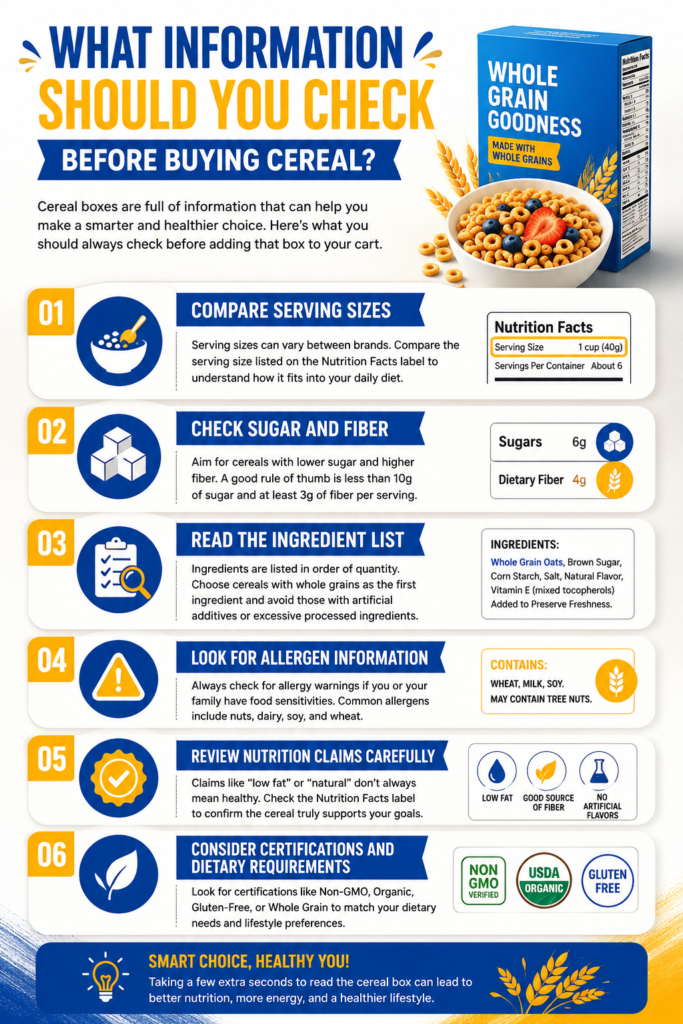
How to Read a Cereal Box Effectively?
Reading a cereal box might seem straightforward but understanding the various sections and how they relate to your dietary needs can significantly enhance your shopping experience.
Here’s a step by step guide to help you decipher the information effectively:
- Start with the Ingredient List: Look at the order of ingredients as the first few listed are present in the highest quantities. Prioritise whole grain options and natural ingredients while avoiding artificial additives and excessive sugars.
- Examine the Nutritional Facts Panel: This is where you’ll find essential data about serving size, calories and macronutrients. Pay special attention to the serving size, as this can often be smaller than expected. Calculate how many servings you’ll consume to gauge your actual intake of calories and nutrients.
- Check for Dietary Needs and Preferences: Identify any certifications or claims that align with your dietary restrictions, such as gluten free, vegan or non GMO. This information is often highlighted on the front of the box or within the ingredient list.
- Look for Health Claims: While health claims such as “high in fiber” can be enticing, always verify them against the nutritional facts. Sometimes, a cereal may seem healthy due to a marketing claim but may not offer enough nutrients.
- Consider the Allergen Information: If you have food allergies or sensitivities, this section is crucial. Ensure there are no hidden allergens present in the cereal you choose.
- Evaluate the Fiber and Sugar Levels: Aim for cereals with at least 3-5 grams of fiber and less than 10 grams of added sugars per serving. This balance will support your digestive health and prevent excessive sugar intake.
- Compare Options: If possible, compare multiple brands and varieties side by side. This can help you make better choices based on the nutritional content and ingredient quality.
By following these steps, you can confidently select a cereal that meets your health goals and taste preferences, ultimately contributing to a balanced diet.
FAQs
How can I determine if a cereal is healthy for me?
To assess the healthiness of cereal, check for whole grains as the first ingredient, examine the sugar and fiber contents in the nutritional facts panel and consider any dietary claims or certifications, such as gluten free or organic.
Are there any cereals children should avoid?
When selecting cereals for children, be cautious of those high in sugar or artificial ingredients. Opt for options that are whole grain based and contain minimal added sugars. Look for cereals fortified with essential vitamins and minerals to support children’s growth and development while ensuring they remain appealing in flavor and texture.
What marketing elements are commonly found in a cereal box?
Cereal boxes often feature brand logos, product names, mascots or characters and promotional slogans. They may also include claims like “low fat,” “high in fiber,” or “contains whole grains,” along with visuals that appeal to target consumers, such as colorful graphics or pictures of the cereal.
Can I find information on the cereal’s environmental impact or packaging recyclability?
Some cereal boxes include information about the packaging’s recyclability or the company’s environmental initiatives. This might be indicated by symbols or text, often located near the barcode or on the back of the box.
In summary
A cereal box provides essential information that can guide consumers in making informed choices about their breakfast options. Key elements include the ingredient list which reveals the quality and source of the ingredients and the nutritional facts panel, offering insights into serving size, calorie count and macronutrient breakdown.
Additionally, dietary claims and allergen information ensure that those with specific dietary needs can find suitable options. By carefully examining these components, consumers can select cereals that not only satisfy their taste preferences but also align with their health goals, ultimately contributing to a more balanced diet.


