
How Can We Improve Cereal Boxes?
Cereal boxes have been a staple in our breakfast routines for decades but have you ever stopped to think about how they can be improved? From their design to functionality, numerous aspects of cereal boxes may not be meeting the needs and preferences of consumers.
As technology and consumer behavior continue to evolve, brands and companies in the cereal industry need to adapt and innovate.
In this blog post, we will explore different ways how we can improve cereal boxes making them more appealing, convenient and sustainable. So grab a bowl of your favorite breakfast cereal as we dive into the world of packaging innovation!
7 Best Ways to Improve Cereal Boxes
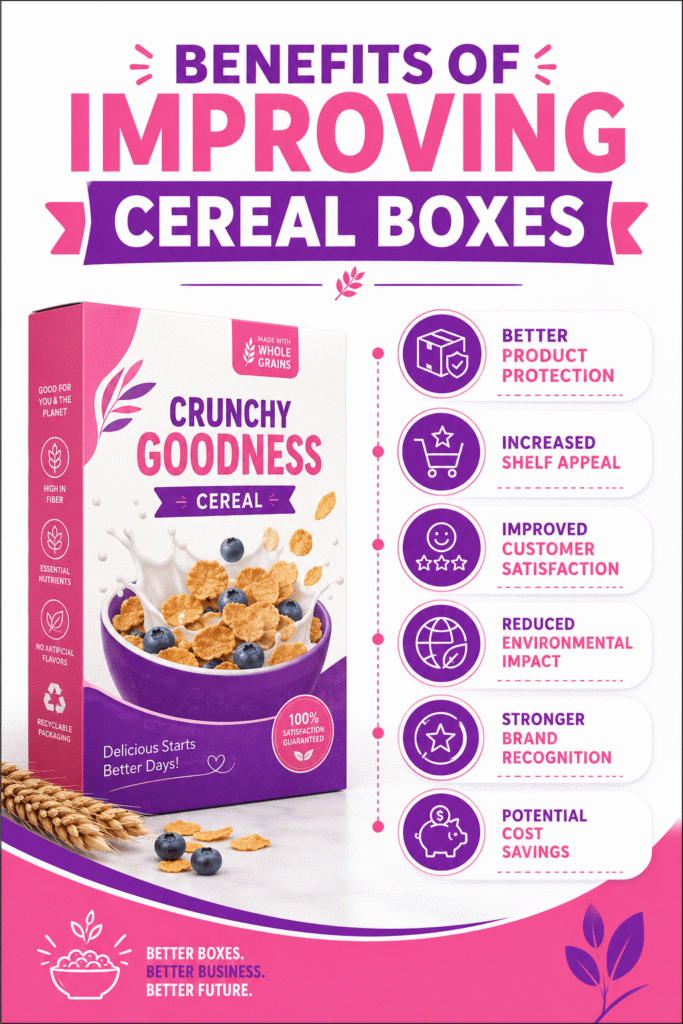
Improving cereal boxes involves enhancing their functionality, sustainability and appeal to consumers. Here’s a detailed breakdown of how cereal boxes can be improved:
1. Sustainability
- Eco-Friendly Materials: Traditional cereal boxes are made from paperboard which is often recyclable but not always sourced from sustainable materials. Understanding the materials used to make cereal boxes can help brands choose more sustainable packaging solutions. The U.S. Environmental Protection Agency provides guidance on sustainable packaging practices and explains how lightweight and efficient packaging can reduce waste and environmental impacts.
- Minimalist Design: Reducing the amount of ink used by opting for simpler designs with fewer colors can make the recycling process easier and less energy intensive.
- Packaging Reduction: Reducing the thickness of the cardboard or eliminating inner plastic bags by using airtight, resealable packaging can minimize waste.
2. Functionality
- Resealable Packaging: Adding resealable features such as zip locks or foldable tabs can help keep the cereal fresh longer and reduce the need for consumers to transfer the product to a different container.
- Durability: Improving the strength and durability of the box can prevent damage during transportation ensuring the cereal arrives in good condition. This can be achieved by using stronger yet lightweight materials.
- Portability: Designing boxes that are easier to carry such as adding handles or incorporating a design that allows the box to be easily held can enhance convenience especially for people who buy cereal on the go.
3. Consumer Engagement
- Interactive Designs: Incorporating interactive elements like QR codes that link to games, recipes or educational content can make the box more engaging for children and adults alike.
- Personalization: Allowing consumers to customized their cereal boxes with their names or designs could make the product feel more special and increase brand loyalty.
- Transparency: Adding a clear window to the box to show the product inside can give consumers a better idea of what they are buying, increasing trust in the product.
4. Aesthetics
- Modern Design: Updating the visual appeal of cereal boxes with sleek, modern graphics can attract a more design conscious audience. This might include minimalist designs, vibrant colors or even collaborations with artists.
- Limited Editions: Releasing limited edition boxes featuring popular culture themes, seasonal designs or collaborations with influencers can create a buzz and drive sales.
- Tactile Elements: Adding textures to the box such as embossing or matte finishes can make the product stand out on the shelf and provide a more premium feel.
5. Innovative Shapes and Sizes
- Optimized Shape: While most cereal boxes are rectangular, experimenting with different shapes that maximize shelf space and stand out could be a game changer. However the new shape should still be practical for stacking and storing.
- Portion Sized Packaging: Offering smaller portion sized boxes within a larger package can cater to single person households or those who prefer variety without buying large quantities of one type.
6. Information and Transparency
- Clearer Nutritional Information: Highlighting nutritional information in an easy to read format can help health conscious consumers make informed decisions. The FDA explains the information included on the nutrition facts label including serving sizes, calories and added sugars.
- Storytelling: Using the packaging to tell the brand’s story or highlight the origin of ingredients can create a stronger connection with consumers especially those who value transparency and ethical sourcing.
7. Smart Packaging
- Connected Packaging: Integrating technology such as NFC tags or smart labels that consumers can scan with their smartphones to get more information about the product, track its journey from farm to table or even reorder directly from the box.
- Freshness Indicators: Including indicators that change color to show if the product is still fresh or if it has been exposed to moisture can enhance the user experience and reduce food waste.
Case Studies of Cereal Box Innovations
| Brand | Innovation | Description | Impact |
|---|---|---|---|
| Kellogg’s | Eco-Friendly Packaging | Transitioned to 100% recyclable paperboard for their cereal boxes, focusing on sustainable sourcing. | Reduced environmental footprint and increased brand trust among consumers. |
| General Mills | Resealable Packaging | Introduced a zip lock feature on their cereal boxes to maintain freshness after opening. | Extended shelf life of products and reduced food waste. |
| Post Consumer Brands | Interactive Elements | Implemented QR codes on boxes that direct consumers to recipes and games, enhancing engagement with their audience. | Increased customer interaction and brand loyalty. |
| Nestlé | Storytelling | Redesigned boxes to include stories about the sourcing of ingredients, fostering a connection with health conscious consumers. | Strengthened brand consumer relationships and showcased transparency. |
| Nature’s Path | Limited Editions | Launched limited edition boxes featuring collaborations with artists, attracting attention and seasonal excitement. | Boosted sales and created a buzz around the brand. |
| Cheerios | Portion Sized Packaging | Offered smaller, single serving boxes alongside regular sizes to cater to various household needs. | Increased accessibility and convenience for single person households. |
| Quaker Oats | Smart Packaging | Integrated NFC tags that allow consumers to access recipe ideas and product information through their smartphones. | Enhanced consumer experience and created opportunities for brand engagement. |
FAQs
What are some eco-friendly materials we can use for cereal boxes?
Using 100% recyclable paperboard, biodegradable plastics or compostable materials can significantly reduce environmental impact.
How can we enhance the durability of cereal boxes?
Employing stronger yet lightweight materials, reinforced seams and double walled designs can help prevent damage during transportation.
How can we ensure clear nutritional information?
Highlighting nutritional facts prominently on the front of the box in a clear font can facilitate informed decisions for health conscious consumers.
How can technology be integrated into cereal box design?
Technology can be integrated by adding QR codes for recipes or promotions, using augmented reality (AR) for interactive experiences or incorporating NFC tags for contactless information sharing.
Conclusion
Improving cereal boxes is essential not only for enhancing consumer satisfaction but also for addressing environmental concerns and market demands.
By focusing on aspects such as sustainability, durability, consumer engagement and innovative design companies can create packaging that stands out on the shelf while promoting a positive brand image.
Incorporating features like interactive designs, smart technology and clearer nutritional information empowers consumers and fosters greater loyalty. As the industry continues to evolve brands must remain adaptable and responsive to the changing preferences of their audience ensuring that cereal packaging is both functional and appealing in today’s competitive marketplace.


